
For the last few years, I have published a post at the beginning of one year highlighting the best books I’ve read in the previous year. Here are my top 10 from 2025, listed in the order in which I read them. Two of the books were published in 2025, but the rest have earlier publication dates ranging from 2012 to 2024.
1. In Love: A Memoir of Loss and Love by Amy Bloom
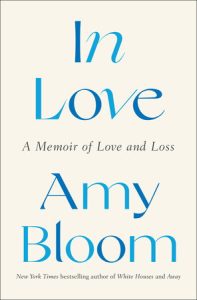
Published by Random House in 2022, In Love: A Memoir of Loss and Love is a powerful story of one couple’s determination to support each other in their last journey together.
Their world is altered when an MRI confirms the truth Bloom and her husband Brian could no longer ignore: Brian had Alzheimer’s disease. He becomes determined to live on his feet and not die on his knees. This leads to a difficult and painful decision to go to Dignitas, an organization based in Switzerland that empowers a person to end their own life with dignity and peace. The memoir is beautifully written, full of love, and intensely personal.
Bloom’s writing will draw any reader into the many emotions she went through, but they particularly resonated with me. The stories in the book show how Bloom slowly loses her husband and their life together bit by bit as his dementia grows. Although my husband never lost his mental capabilities, a neurological degenerative disease slowly robbed him of mobility and health. I related to the grief of little loss after little loss. When my husband’s disease reached near the point of what would have been a protracted painful end, one we’d watched his father experience thirty-six years earlier, he chose medically assisted dying. He qualified for this in Canada and did not need to go Switzerland. The process was simpler than what Bloom and her husband went through. I don’t know if I would have the strength and the tenacity she displayed in supporting her husband’s wishes, but I could understand many of the emotions she went through.
The book is sad, peppered with wit, and lovely.
2. Hotline by Dimitri Nasrallah
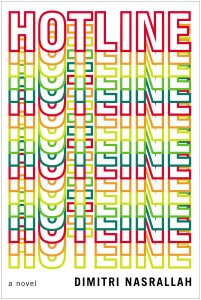
Published in 2022 by Esplanade Books, Hotline tells the story of Muna Heddad, who fled Lebanon with her young son to start a new life in Montreal. She’d hoped to find work teaching French, but no one in Quebec trusts her to teach the language. She finds work as a hotline operator at a weight-loss centre.
She’s good at listening and shows interest in her clients’ lives. As she listens to their confessions, she gains insights into herself. Memories of Lebanon mix with her experiences in Montreal in what is a challenging time for her and her son. Little by little, they integrate into their new life, make friends, and begin to thrive.
Hotline is a hopeful book.
3. Blood on the Breakwater by Jean Paetkau
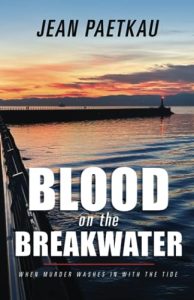
Published in 2023, Blood on the Breakwater is a pleasant cozy mystery set in Victoria, British Columbia, Canada. Journalist Helene Unger takes daily walks on the historic and picturesque Ogden Breakwater as a way to deal with the stress of work and single parenting. One evening she discovers a corpse washed up on the lower pathway of the breakwater. The dead woman is the curator of a museum dedicated to a nineteenth-century Canadian painter.
Not only is Unger driven to track down the murderer, she is drawn to mystery of the unexplained 1886 disappearance of the painter revealed through letters left behind by the late artist, letters that may have a bearing on the modern murder.
I read the book while I was vacationing in Victoria. I visited the Ogden Breakwater. (You can read about my visit here.) I also read Paetkau’s second book The Sinking of Souls while I was there. The murder in that book occurs in Craigdarroch Castle, a Victorian mansion built for a wealthy family in the 1880s that now operates as a museum. I’d toured Craigdarroch Castle on a past visit to Victoria. (You can read about that visit here.)
The real local landmarks and the characters in both books not only create interesting mysteries. They reveal a part of the character of the city of Victoria itself.
4. The Little Old Lady Who Broke All The Rules by Catharina Ingleman-Sundberg, translated by Ray Bradbury
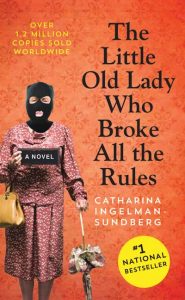
Published in Sweden in 2012 and translated into English in 2014, The Little Old LadyWho Broke All The Rules is an absolutely delightful read.
79-year-old Martha Anderson dreams of escaping her care home and robbing a bank. She has no intention of spending the rest of her days in an armchair. She and her four friends, otherwise known as the League of Pensioners, rebel against all the rules imposed upon them and create an uproar protesting early bedtimes and plastic meals. Their antics become more daring as they devise a plan to steal art works so as to land up in prison, where they feel they will have better facilities and meals than in their current care home.
Things do not go exactly to plan, sometimes because of flaws in planning, but often due to the fact that the elderly are ignored and underestimated. One adventure leads to another and another and another. Improbable coincidences and turns of events feel almost inevitable as you laugh and cheer on this team who resolve to stand up for old pensioners everywhere.
The book is fast-moving and visual. It would make a great movie.
5. The Covenant of Water by Abraham Verghese
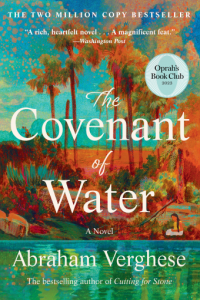
Published in 2023 by Grove Atlantic, The Covenant of Water, set in Kerala, on India’s Malabar Coast, follows three generations of a family spanning the years from 1900 to 1977. The family suffers a peculiar affliction: in every generation, at least one person dies by drowning. In Kerala, water is everywhere.
The book starts as a twelve-year-old girl from Kerala’s Christian community is sent by boat to her wedding to a forty-year-old widower after the death of her father. This young girl becomes the matriarch of the family we follow through the generations. A parallel story about a young Scottish doctor who joins the Indian medical service during colonial times dovetails with that of the Indian family.
This sweeping 715-page novel follows the ups and downs of the people in each generation. Historical events, including the effects of India’s colonization by the British and the struggle for independence, impact the family and the turn of events in the story, but they remain more of a backdrop than the main event. The lives and emotions of this family are the real story. The author also does a great of making the landscape of Kerala come alive for the reader.
The book is compelling. Despite its length, I read it relatively quickly. I felt slowed down a bit a little over half way, but not for long. The characters and their lives soon captivated me again. As it says in the blurb about the book, it is “a hymn to progress in medicine and to human understanding, and a humbling testament to the hardships undergone by past generations for the sake of those alive today.”
6. Lightning Strikes the Silence by Iona Whishaw
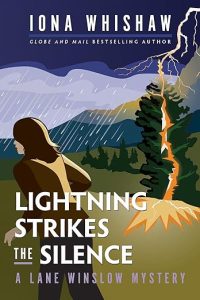
Published in 2024 by Touchwood Editions, Lightning Strikes the Silence is the eleventh (and most recent) book in the in the Lane Winslow mystery series.
The mystery series is set in British Columbia’s Kootenays in the years after World War II. Lane Winslow, a young ex-spy from London settles in a small village. Things that happen around her pull her into solving mysteries along with Inspector Darling of the Nelson Police.
In Lightening Strikes the Silence, Lane follows the noise of an explosion on a warm June afternoon up a steep path to a cabin where she finds a Japanese girl, injured and mute, hiding nearby. As she attempts to search for the girl’s family, Inspector Darling looks into a nighttime heist at the local jeweller’s, where the jeweller is found dead in his office.
Like the other books in the series, several characters from the village of King’s Cove and the Nelson Police Department appear. Like other books in the series, issues of the time provide context. In this case, it is the internment of Japanese-Canadians during World War II. And, like other books in the series, it is a fun read.
7. The Testaments by Margaret Atwood
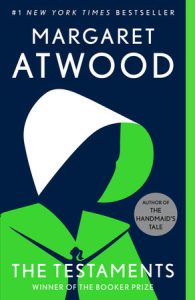
Published in 2019 by Nan Talese, The Testaments is Atwood’s sequel to The Handmaid’s Tale, which was published in 1985 and featured the future dystopian nation of Gilead.
The Testaments picks up the story fifteen years later. It is written from the perspectives of three different females in a declining Gilead. Their accounts are presented as part of research seminars at the Symposium of Gileadian Studies.
One of the women is Aunt Lydia, who indoctrinates new handmaids and is one of the least likeable characters in The Handmaid’s Tale. In The Testaments, we learn she has been secretly writing her memoirs and about how she became Aunt Lydia. The second woman is Agnes, a young woman who has grown up in Gilead and is being groomed to marry a commander. The third is Daisy, a feisty teenager living in Canada with two people who run a thrift store and whom she supposes to be her parents.
It has been a lot of years since I read The Handmaid’s Tale and I haven’t watched the television series. I remembered basic concepts about Gilead, but I suspect I may have missed the significance of a few details with links back to that book. Still, that didn’t stop me from becoming totally engaged in The Testaments. Could you read and appreciate The Testaments without having read The Handmaid’s Tale? I think likely yes, but you will appreciate and understand more if you have read The Handmaid’s Tale.
The book was easy to read and kept my interest. Although the book offers hope that the kind of evil that creates a place like Gilead eventually creates its own demise, I found the book frightening because the dystopian world it portrays doesn’t seem as far removed from the realm of possibility as I would like it to be.
8. The Briar Club by Kate Quinn
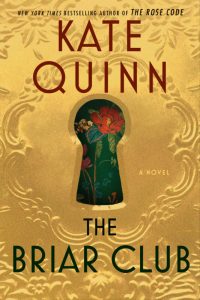
Published in 2024 by William Morrow, The Briar Club takes place in a 1950s down-at-the-heels all-female boarding house in Washington, D.C. The women keep to themselves until the lovely mysterious widow Grace March moves into the attic and draws her oddball collection of neighbours into unlikely friendship.
The book spans the course of four years starting with the arrival of Grace March as told by the young son of the landlady. Other chapters are told from the points of view of the other tenants. It is the era of McCarthy paranoia and changing roles for women in postwar America. The reader learns the women’s secrets and watches them and their friendships grow. The weekly attic dinner parties Grace hosts became a healing balm on all their lives. The house itself becomes a character as it relates a shocking act of violence that tears apart the house.
The women deal with serious issues, but there is also a lot of fun in the book. Quinn includes recipes for some of the dishes the women bring to the weekly dinner.
Sometimes a book with this many characters can be confusing, but I didn’t find that to be the case here. Each one was distinctive and unique. I was interested in each of the women and enjoyed reading about the connections forged between them. Over the course of those four years, the entire atmosphere of the house changes and everyone becomes more interconnected.
This book is another delightful read.
9. Portage and Main: How An Iconic Intersection Shaped Winnipeg’s History, Politics, and Urban Life by Sabrina Janke and Alex Judge
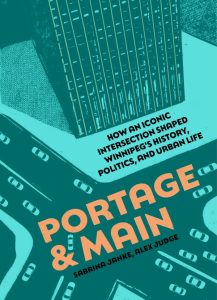
The intersection of Portage Avenue and Main Street is at the physical and emotional heart of the city of Winnipeg, Manitoba, Canada. Published in 2025 by Great Plains Press, Portage and Main explores the complicated relationship between the city’s oldest intersection and the culture of the urban environment that grew up around it.
The book is timely in that the intersection reopened to pedestrians in June of 2025 after being closed to them since 1979 as part of a 40-year deal the city made with developers which saw pedestrians redirected through an underground concourse.
In exploring the history of this intersection from its beginnings in the 1860s to modern day, the intersection becomes a focal point to show how Winnipeg has evolved. The authors highlight events, protests, and celebrations that have occurred at the corner, relate public opinions of the time, and include a number of quirky and amusing incidents.
The well-researched book is very readable and provides insight into the history and character of Winnipeg. You can read the more detailed review I wrote here.
(Note: Yes, Sabrina Janke is a relative. She is my niece. As I mention in the detailed review, that certainly prompted me to read the book as soon as it was released, but it doesn’t change what I have written in the review. It is a very good book.)
10. Finding Flora by Elinor Florence
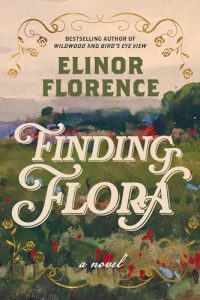
Published in 2025 by Simon & Schuster, Finding Flora takes place in Alberta, Canada in the early 1900s. Scottish newcomer Flora Craigie jumps from a moving train to escape her abusive husband and is determined to disappear and start a new life for herself. She claims a homestead on the wild Alberta prairie and discovers that her nearest neighbours are also women: a Welsh widow with three children, two American women raising chickens, and a Métis woman who breaks horses.
They battle the harsh environment, local antipathy towards female farmers, and threats of expropriation. All the while, Flora fears her husband will find her.
The writing drew me in to the lives of these women and kept me engaged. I found the ending perhaps at bit at odds with the fierce independence driving the rest of the book, but satisfying in its own way.
The historical aspects of the novel were interesting. I did a bit of checking while reading the book. Women homesteaders and farmers did indeed exist. Under the Dominion Lands Act of 1872, the head of a family, or any single man or woman aged 21 years or older was eligible for a homestead. In 1876, the Act was amended so that only the sole head of a family or any male over age 18 was eligible. The change excluded single women, but there were still options to purchase land from the railway, vacating homesteaders, or from veterans of the South African War who received a land scrip for their service (which is how Flora acquired her homestead).
The book was recommended on a blog written by a friend. As I finished it on Christmas Eve, I thought about Jólabókaflódð, the Icelandic tradition of giving books on Christmas Eve and staying up all night to read them. I did not get the book as a gift on Christmas Eve and had actually started it several days before that. I did not stay up all night, but I did stay up later than I had intended because I wanted to keep reading to the end.
Be First to Comment